Inverted V Dipole Calculator

Inverted v dipole calculator
The basic formula for determining the wire length of a center fed, 1/2 wave wire dipole or inverted Vee antenna is: 143 ÷ freq(mhz) = Length(metres). The inverted Vee antenna will be shorter by 2 – 5% depending on the angle from horizontal.
What is an inverted V dipole?
An inverted vee antenna is a type of antenna similar to a horizontal dipole, but with the two sides bent down towards the ground, typically creating a 120 or 90 degree angle between the dipole legs.
How high should inverted V dipole be?
Inverted V dipole installation considerations Angle between dipole legs should be at least 90° and preferably around 120°. For example, when designed for the 3.5MHz band an inverted-V will need a centre support at least 14m (45ft) high and a garden length of around 34m (110ft).
What is the impedance of an inverted V antenna?
An inverted V antenna is naturally very close to the impedance of 50 Ohm, which makes the antenna very popular with amateurs. Often a high feed point is chosen and the ends are then slightly lowered. In any case, make sure that the ends are a few meters above the ground.
What is the best angle for an inverted V antenna?
This is important to attain optimum performance. Typically, most Inverted V structures are designed to have the Apex angle between 120°-90°.
How do you calculate V formula?
Velocity (v) is a vector quantity that measures displacement (or change in position, Δs) over the change in time (Δt), represented by the equation v = Δs/Δt.
How effective is an inverted V antenna?
NEC models suggest that the radiation efficiency of the Inverted V is around 42% or -3.8dB, and the small transmitting loop would appear to be about 15 dB lower at -18.8 dB or 1.3%.
Which direction does an inverted V antenna radiate?
The radiation pattern of inverted V-antenna is uni-directional pattern, as no standing waves are formed here.
How high should my dipole be?
For best results, dipoles should be at least 1/2 wavelength above ground level. For the lower bands, especially 160-40 meters, this can become impractical--place your dipole as high as your situation allows.
Should a dipole antenna be vertical or horizontal?
Even when far-away ground reflections may cause the directivity of a vertical HF antenna at low take-off angles to be much higher than that of a horizontal HF antenna, its net gain will still be lower at those angles. This makes the horizontal HF antenna a clear winner, at least for what transmission is concerned.
How high should a 20m dipole be?
20 Meter Dipole at 42 feet.
What should be the length of the dipole antenna?
0.125m. Q. For amplitude modulated wave, carrier frequency should be message frequency.
Are all antennas 50 ohm?
Most antennas are not 50 ohms. The transmission line( cable ) is 50 or 75 ohms. The antenna is adjusted to match the transmission line to minimize losses.
How do you calculate the impedance of a dipole antenna?
Note that the input impedance is specified as Z=R + jX, where R is the resistance and X is the reactance. Figure 2. Input impedance as a function of the length (L) of a dipole antenna.
How many ohms should an antenna have?
The native impedance of most antennas is about 300 ohms. This is a factor of the way transmissions happen and the material used to receive them.
Why should antenna height is lambda by 4?
For efficient radiation and reception, the height of transmitting and receiving antennas should be comparable to a quarter of wavelength of the frequency used. So for efficient transmission of signals of wavelengths λ the minimum length of antenna should be λ/4.
Does tilting TV antenna help?
More common is electrical beam tilt, where the phasing between antenna elements is tweaked to make the signal go down (usually) in all directions. This is extremely useful when the antenna is at a very high point, and the edge of the signal is likely to miss the target (broadcast audience, cellphone users, etc.)
What angle should I point my antenna?
You're usually best off placing the antenna on a wall that runs at or close to a 90-degree angle to the direction of the signal.
What are the 3 formulas for velocity?
The three equations are, v = u + at. v² = u² + 2as. s = ut + ½at²
What are the 3 formulas in Ohm's law?
Remember in the formula for ohm's.
10 Inverted v dipole calculator Images
Learn class 12 physics chapter 1 Electric Charges and Fields Electric

Ham Radio MIPL Inverted V Dipole Antenna Dipole antenna Antenna

Broadband Butterfly Terminated Dipole Antenna BBTD Back Yard Inverted V

Rectangle Body Shape What to Wear FashionActivation Rectangle

This calculator is designed to give the horizontal length of a

All Band Sloping Inverted L Antenna by LA1IC Ham radio Ham radio

This is a nice fan dipole drawing from YC8PVU I have built many of
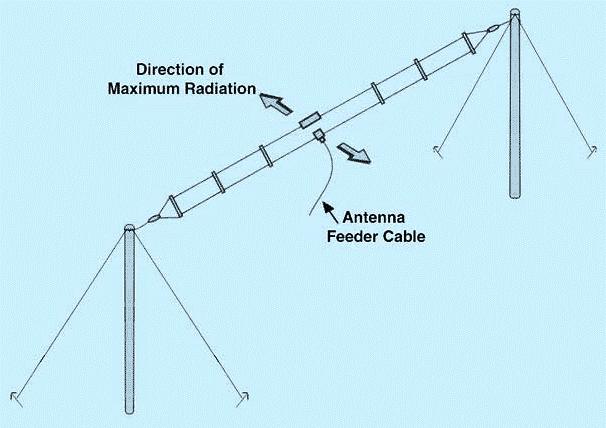
HF Broadband Two Element Folded Dipole Antenna can be mounted either in

Image result for multiband dipole hf antenna Ham radio

Post a Comment for "Inverted V Dipole Calculator"