2:1 Multiplexer Truth Table

2:1 multiplexer truth table
A 2-to-1 multiplexer consists of two inputs D0 and D1, one select input S and one output Y. Depending on the select signal, the output is connected to either of the inputs. Since there are two input signals, only two ways are possible to connect the inputs to the outputs, so one select is needed to do these operations.
What is the truth table of multiplexer?
| Selection Lines | Output | |
|---|---|---|
| 1 | 0 | I2 |
| 1 | 1 | I3 |
What is multiplexer formula?
2n : 1 MUX requires (2^n – 1) 2 : 1 MUX. b) 16 : 1 MUX using 4 : 1 MUX. In general, to implement B : 1 MUX using A : 1 MUX , one formula is used to implement the same.
What is 8x1 multiplexer?
The 8×1 multiplexer has 3 selection lines, 4 inputs, and 1 output. The 2×1 multiplexer has only 1 selection line. For getting 16 data inputs, we need two 8 ×1 multiplexers. The 8×1 multiplexer produces one output. So, in order to get the final output, we need a 2×1 multiplexer.
What is multiplexer with example?
Multiplexer means many into one. A multiplexer is a circuit used to select and route any one of the several input signals to a single output. A simple example of an non-electronic circuit of a multiplexer is a single pole multi-position switch. Multi-position switches are widely used in many electronics circuits.
How many 2 1 MUX is required to implement the and operation?
Implementation of NAND, NOR, XOR and XNOR gates requires two 2:1 Mux.
What is multiplexer explain with diagram?
In electronics, a multiplexer (or mux; spelled sometimes as multiplexor), also known as a data selector, is a device that selects between several analog or digital input signals and forwards the selected input to a single output line. The selection is directed by a separate set of digital inputs known as select lines.
What is the final output of a multiplexer?
What is the final output of a multiplexer? Solution: 120. A digital modulation technique which is a form of constant – amplitude angle modulation similar to standard frequency modulation except the modulating signal is binary signal that varies between two discreet voltage levels.
What are the types of multiplexer?
What are the types of multiplexing?
- Frequency-division multiplexing (FDM).
- Wavelength-division multiplexing (WDM). ...
- Time-division multiplexing (TDM). ...
- Code-division multiplexing (CDM). ...
- Space-division multiplexing (SDM). ...
- Polarization-division multiplexing (PDM).
What is multiplexer size?
The size of each multiplexer must be k : 1 since it multiplexes k data lines, where k is the number of registers.
Where are multiplexers used?
Multiplexers are used in various applications wherein multiple-data need to be transmitted by using a single line.
- Communication System.
- Computer Memory. ...
- Telephone Network. ...
- Transmission from the Computer System of a Satellite. ...
- Communication System. ...
- Arithmetic Logic Unit. ...
- Serial to Parallel Converter. ...
- Photo Credits.
How many input pins are there in a 2 1 MUX?
As the name suggests for a 2-Input Multiplexers we will have 2 Input lines and one Output Lines. Also it will have only one Control pin to select between the available two Input pins. A Graphical representation of a 2:1 Multiplexer is shown below.
What is D flip-flop?
Glossary Term: D Flip-Flop A D (or Delay) Flip Flop (Figure 1) is a digital electronic circuit used to delay the change of state of its output signal (Q) until the next rising edge of a clock timing input signal occurs. The truth table for the D Flip Flop is shown in Figure 2.
What is IC 74151?
BD 1.400. The TTL/MSI SN54/74LS151 is a high speed 8-input Digital Multiplexer. It provides, in one package, the ability to select one bit of data from up to eight sources. The LS151 can be used as a universal function generator to generate any logic function of four variables.
What is enable in multiplexer?
An enable input makes the multiplexer operate. When EN = 0, the output is High-Z or less commonly LOW (depending on the specific device). When EN = 1, the multiplexer performs its operation depending on the selection line.
Why MUX is called universal logic circuit?
In most of the application, we experience the use of multiplexers. The multiplexer or MUX is used to implement the Boolean functions or any of the logic gates, and it is called as universal logic. The main application of multiplexer is to select from one of the inputs and hence called as the switch.
Why do we use multiplexing?
The purpose of multiplexing is to enable signals to be transmitted more efficiently over a given communication channel, thereby decreasing transmission costs. A device called a multiplexer (often shortened to "mux") combines the input signals into one signal.
What are the four basic types of multiplexing?
There are three types of Multiplexing : Frequency Division Multiplexing (FDM) Time-Division Multiplexing (TDM) Wavelength Division Multiplexing (WDM)
What is the minimum number of 2 1 MUX?
Detailed Solution We need to implement 4 to 1 Mux using 2 to 1 Mux. We need 4/2 = 2 in first level and 2/2 = 1 in second level. Hence, we need three 2 to 1Multiplexers to implement 4 to 1 Mux.
What is the minimum number of 2 to 1 multiplexers required to implement half?
Right Answer is: B The carry can be implemented by using only one 2 × 1 MUX as shown below. Therefore, we require minimum three multiplexers to implement a half adder.
15 2:1 multiplexer truth table Images
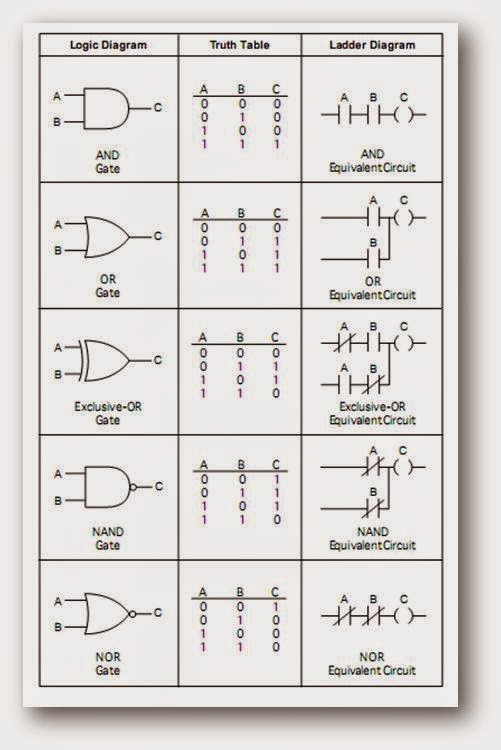
Different Types of Logic Gates

Logic gates AND gate OR gate Truth table Universal gates NOR gate

Logic Part 3 Truth Tables Math tables Secondary math Fun math

Exclusive OR gate EXOR and EXNOR gate XNOR logic gate truth table

Pin on Elektronik

Multiplexer and Demultiplexer Types Differences Their Applications

Twoinput and Threeinput NAND Gates Truth Tables Nand gate Truth Gate

Digital Electronics logic gates AND OR NOT NAND NOR XOR XNOR

8 to 1 multiplexer circuit Analog circuits Circuit Memory chip
Electronic Testing Components Electronic components Pinterest

4 Input NAND Gate Truth Table Nand gate Schmitt trigger Gate

Full Adder Circuit and its Construction Circuit Circuit theory

Pin on Dataschet

2 to 10 tables Multiplication chart Times table chart

Post a Comment for "2:1 Multiplexer Truth Table"